





Smack: Heroin and the American City
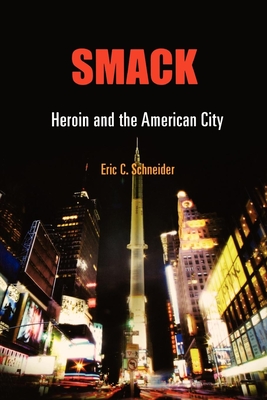
Smack: Heroin and the American City
Why do the vast majority of heroin users live in cities? In his provocative history of heroin in the United States, Eric C. Schneider explains what is distinctively urban about this undisputed king of underworld drugs.
During the twentieth century, New York City was the nation's heroin capital--over half of all known addicts lived there, and underworld bosses like Vito Genovese, Nicky Barnes, and Frank Lucas used their international networks to import and distribute the drug to cities throughout the country, generating vast sums of capital in return. Schneider uncovers how New York, as the principal distribution hub, organized the global trade in heroin and sustained the subcultures that supported its use. Through interviews with former junkies and clinic workers and in-depth archival research, Schneider also chronicles the dramatically shifting demographic profile of heroin users. Originally popular among working-class whites in the 1920s, heroin became associated with jazz musicians and Beat writers in the 1940s. Musician Red Rodney called heroin the trademark of the bebop generation. It was the thing that gave us membership in a unique club, he proclaimed. Smack takes readers through the typical haunts of heroin users--52nd Street jazz clubs, Times Square cafeterias, Chicago's South Side street corners--to explain how young people were initiated into the drug culture. Smack recounts the explosion of heroin use among middle-class young people in the 1960s and 1970s. It became the drug of choice among a wide swath of youth, from hippies in Haight-Ashbury and soldiers in Vietnam to punks on the Lower East Side. Panics over the drug led to the passage of increasingly severe legislation that entrapped heroin users in the criminal justice system without addressing the issues that led to its use in the first place. The book ends with a meditation on the evolution of the war on drugs and addresses why efforts to solve the drug problem must go beyond eliminating supply.PRP: 232.11 Lei

Acesta este Prețul Recomandat de Producător. Prețul de vânzare al produsului este afișat mai jos.
208.90Lei
208.90Lei
232.11 LeiPrimești 208 puncte
Livrare in 2-4 saptamani
Descrierea produsului
Why do the vast majority of heroin users live in cities? In his provocative history of heroin in the United States, Eric C. Schneider explains what is distinctively urban about this undisputed king of underworld drugs.
During the twentieth century, New York City was the nation's heroin capital--over half of all known addicts lived there, and underworld bosses like Vito Genovese, Nicky Barnes, and Frank Lucas used their international networks to import and distribute the drug to cities throughout the country, generating vast sums of capital in return. Schneider uncovers how New York, as the principal distribution hub, organized the global trade in heroin and sustained the subcultures that supported its use. Through interviews with former junkies and clinic workers and in-depth archival research, Schneider also chronicles the dramatically shifting demographic profile of heroin users. Originally popular among working-class whites in the 1920s, heroin became associated with jazz musicians and Beat writers in the 1940s. Musician Red Rodney called heroin the trademark of the bebop generation. It was the thing that gave us membership in a unique club, he proclaimed. Smack takes readers through the typical haunts of heroin users--52nd Street jazz clubs, Times Square cafeterias, Chicago's South Side street corners--to explain how young people were initiated into the drug culture. Smack recounts the explosion of heroin use among middle-class young people in the 1960s and 1970s. It became the drug of choice among a wide swath of youth, from hippies in Haight-Ashbury and soldiers in Vietnam to punks on the Lower East Side. Panics over the drug led to the passage of increasingly severe legislation that entrapped heroin users in the criminal justice system without addressing the issues that led to its use in the first place. The book ends with a meditation on the evolution of the war on drugs and addresses why efforts to solve the drug problem must go beyond eliminating supply.Detaliile produsului



