








The Philosophy of Film Noir
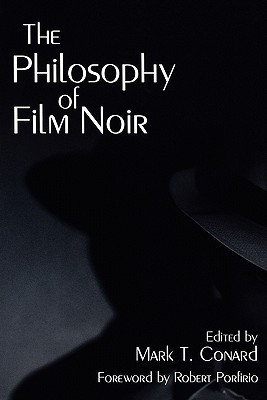
The Philosophy of Film Noir
A drifter with no name and no past, driven purely by desire, is convinced by a beautiful woman to murder her husband. A hard-drinking detective down on his luck becomes involved with a gang of criminals in pursuit of a priceless artifact. The stories are at once romantic, pessimistic, filled with anxiety and a sense of alienation, and they define the essence of film noir. Noir emerged as a prominent American film genre in the early 1940s, distinguishable by its use of unusual lighting, sinister plots, mysterious characters, and dark themes. From The Maltese Falcon (1941) to Touch of Evil (1958), films from this classic period reflect an atmosphere of corruption and social decay that attracted such accomplished directors as John Huston, Alfred Hitchcock, Billy Wilder, and Orson Welles. The Philosophy of Film Noir is the first volume to focus exclusively on the philosophical underpinnings of these iconic films. Drawing on the work of diverse thinkers, from the French existentialist Albert Camus to the Frankurt school theorists Max Horkheimer and Theodor Adorno, the volume connects film noir to the philosophical questions of a modern, often nihilistic, world. Opening with an examination of what constitutes noir cinema, the book interprets the philosophical elements consistently present in the films -- themes such as moral ambiguity, reason versus passion, and pessimism. The contributors to the volume also argue that the essence and elements of noir have fundamentally influenced movies outside of the traditional noir period. Neo-noir films such as Pulp Fiction (1994), Fight Club (1999), and Memento (2000) have reintroduced the genre to a contemporary audience. As they assess the concepts present in individual films, the contributors also illuminate and explore the philosophical themes that surface in popular culture. A close examination of one of the most significant artistic movements of the twentieth century, The Philosophy of Film Noir reinvigorates an intellectual discussion at the intersection of popular culture and philosophy.
PRP: 274.87 Lei

Acesta este Prețul Recomandat de Producător. Prețul de vânzare al produsului este afișat mai jos.
247.38Lei
247.38Lei
274.87 LeiPrimești 247 puncte

Indisponibil
Descrierea produsului
A drifter with no name and no past, driven purely by desire, is convinced by a beautiful woman to murder her husband. A hard-drinking detective down on his luck becomes involved with a gang of criminals in pursuit of a priceless artifact. The stories are at once romantic, pessimistic, filled with anxiety and a sense of alienation, and they define the essence of film noir. Noir emerged as a prominent American film genre in the early 1940s, distinguishable by its use of unusual lighting, sinister plots, mysterious characters, and dark themes. From The Maltese Falcon (1941) to Touch of Evil (1958), films from this classic period reflect an atmosphere of corruption and social decay that attracted such accomplished directors as John Huston, Alfred Hitchcock, Billy Wilder, and Orson Welles. The Philosophy of Film Noir is the first volume to focus exclusively on the philosophical underpinnings of these iconic films. Drawing on the work of diverse thinkers, from the French existentialist Albert Camus to the Frankurt school theorists Max Horkheimer and Theodor Adorno, the volume connects film noir to the philosophical questions of a modern, often nihilistic, world. Opening with an examination of what constitutes noir cinema, the book interprets the philosophical elements consistently present in the films -- themes such as moral ambiguity, reason versus passion, and pessimism. The contributors to the volume also argue that the essence and elements of noir have fundamentally influenced movies outside of the traditional noir period. Neo-noir films such as Pulp Fiction (1994), Fight Club (1999), and Memento (2000) have reintroduced the genre to a contemporary audience. As they assess the concepts present in individual films, the contributors also illuminate and explore the philosophical themes that surface in popular culture. A close examination of one of the most significant artistic movements of the twentieth century, The Philosophy of Film Noir reinvigorates an intellectual discussion at the intersection of popular culture and philosophy.
Detaliile produsului




